
How AI Is Accelerating Protein Folding and Protein Design

AI in Protein Folding and Protein Design has quietly become one of the most consequential shifts in modern biotechnology. For most of the twentieth century, figuring out the physical shape of a single protein could consume a PhD student's entire thesis. Today, a researcher can type an amino acid sequence into a browser tab and get a structural prediction back before their coffee gets cold. That is not an exaggeration — it is the practical reality created by models like AlphaFold, RFdiffusion, and a fast-growing ecosystem of open-source alternatives.
Proteins are the working molecules of every living cell. They digest food, fight infections, carry oxygen, and switch genes on and off. What a protein does is dictated almost entirely by its physical shape — the precise three-dimensional arrangement its chain of amino acids settles into. Get the shape wrong, or fail to predict it at all, and you lose the ability to design a drug that binds it, an enzyme that breaks down plastic, or an antibody that neutralizes a virus.
For decades, scientists had only slow, expensive physical methods to determine these shapes. Crystallize the protein, blast it with X-rays, wait months, and hope the crystal formed cleanly in the first place. That bottleneck defined the pace of structural biology. What has changed in the last five years is not incremental — it is a full transition from passive observation to active, generative design. Machine learning models no longer just predict what shape a natural protein takes. They now generate entirely new proteins that have never existed in nature, built atom by atom for a specific job. This guide walks through how that transition happened, the architectures behind it, the tools available today, and where the field is heading next.
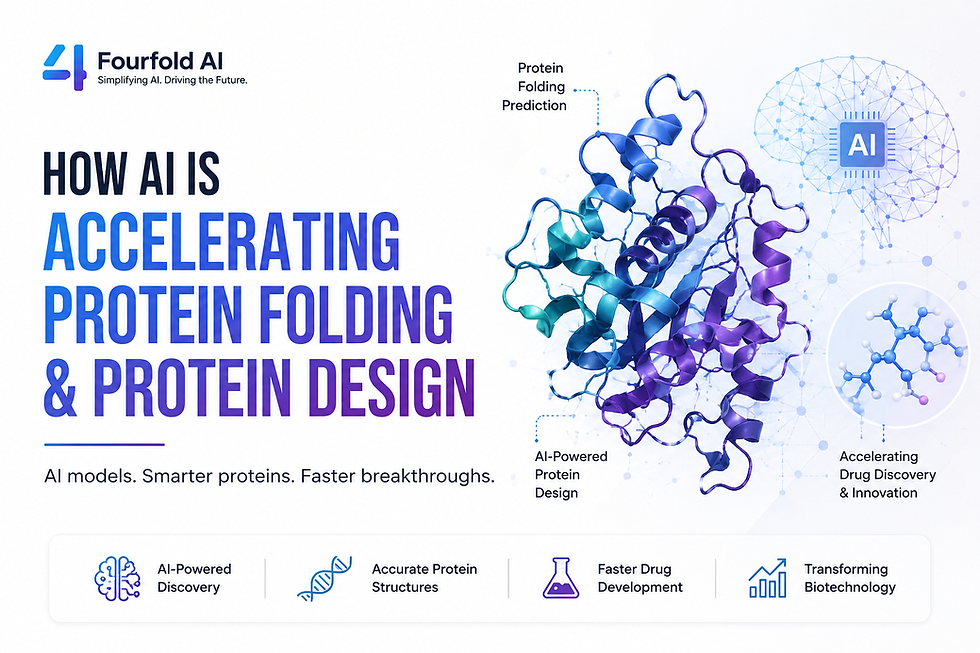
What Is Protein Folding?
Definition: Protein folding is the physical process by which a linear chain of amino acids folds into a unique, three-dimensional structure. This specific 3D shape is determined by the protein's genetic sequence and is essential for the protein to perform its biological functions within a cell.
Every protein starts as a flat, one-dimensional string — a sequence of amino acids linked together like beads on a wire, technically known as the polypeptide backbone. Within microseconds to seconds, that string collapses and twists itself into a compact, functional shape. Understanding that collapse means understanding structural biology at four distinct levels.
The Four Levels of Protein Structure
The primary structure is simply the order of amino acids in the chain — the genetic blueprint spelled out one residue at a time. The secondary structure describes local folding patterns that emerge from hydrogen bonding along the backbone, mainly alpha-helices (coiled springs) and beta-sheets (pleated ribbons). The tertiary structure is the full three-dimensional conformation of a single polypeptide chain, the shape most people picture when they think of a protein. Finally, the quaternary structure describes how multiple folded protein chains assemble together into larger functional complexes, like hemoglobin's four linked subunits working in concert to carry oxygen.
The Thermodynamics of Folding
Folding is not a random accident; it is driven by physics. The hydrophobic effect pushes water-repelling amino acid side chains into the protein's interior, away from the surrounding water, while water-loving side chains stay on the exterior. This hydrophobic collapse does most of the heavy lifting early in folding. From there, hydrogen bonding networks stabilize the secondary structure, and van der Waals interactions — weak but numerous attractive forces between closely packed atoms — lock the final shape into place. The whole process is really a search for the state of lowest free energy, the most thermodynamically stable arrangement the chain can reach given its particular sequence of torsional angles between backbone atoms.
When Folding Goes Wrong
Misfolding is not a rare glitch — it is a recognized cause of serious disease. When a protein fails to reach its correct shape, it can clump into toxic, insoluble aggregates instead of performing its intended job. This process sits at the center of several major neurodegenerative diseases, including Alzheimer's, where misfolded amyloid-beta and tau proteins accumulate in the brain, and Parkinson's, where alpha-synuclein aggregates disrupt neuron function. Huntington's disease follows a similar pattern with a mutated huntingtin protein. Misfolding is not confined to the brain, either; cystic fibrosis stems from a misfolded chloride channel protein that never reaches the cell membrane where it belongs.
Why Protein Folding Was One of Biology's Biggest Challenges
Levinthal's Paradox
In 1969, molecular biologist Cyrus Levinthal posed a problem that would haunt structural biology for the next fifty years. If a protein folded by randomly trying every possible conformation until it stumbled onto the correct one, the search would take longer than the age of the universe — even for a modestly sized protein with a modest number of possible torsional angles at each residue. Yet real proteins in real cells fold correctly in microseconds to seconds. This mismatch between theoretical search time and observed folding speed became known as Levinthal's paradox, and it implied that proteins don't search randomly at all — they follow guided energetic pathways toward their final shape. The paradox explained why folding was fast in nature, but it did nothing to help scientists predict, on a computer, what shape any given sequence would land on.
Traditional Wet-Lab Methods
Before machine learning entered the picture, three experimental techniques carried the entire weight of structural biology. X-ray crystallography remains the historical workhorse: a purified protein is coaxed into forming a crystal, then blasted with X-rays whose diffraction pattern reveals atomic positions. Cryo-electron microscopy (Cryo-EM) flash-freezes proteins in solution and images them directly with electron beams, a technique that surged in popularity because it doesn't require crystallization at all. Nuclear Magnetic Resonance (NMR) spectroscopy measures how atomic nuclei behave in a magnetic field, useful for smaller proteins and for capturing structures in solution rather than in a rigid crystal lattice.
The Cost-Time Bottleneck
Each of these methods works, but none of them works quickly or cheaply. A single solved structure could easily consume months to years of trial-and-error optimization — getting a protein to crystallize alone can fail indefinitely for some targets. Costs routinely ran into the tens of thousands of dollars per structure once you account for staff time, specialized equipment, and beamline access. Multiply that across the roughly 200 million proteins cataloged across known organisms, and it becomes obvious why, even after decades of work, only a small fraction of the protein universe had ever been experimentally resolved. That gap between what biology needed to know and what labs could physically determine is exactly the gap AI stepped into.
How AI Solves Protein Folding
Learning from the Protein Data Bank (PDB)
The Protein Data Bank (PDB) is the global, freely accessible repository of experimentally determined protein structures — the collective output of decades of crystallography, Cryo-EM, and NMR work. It became the essential training ground for every major structure-prediction model. Neural networks trained on the PDB learn to recognize spatial correlations: which amino acids tend to sit near each other in folded structures, and how evolutionary substitutions at one position in a protein family correlate with compensating changes elsewhere. That second pattern, known as co-evolution, turns out to be a remarkably strong signal for physical proximity — if two positions in a protein consistently mutate together across related species, they are probably touching in the folded structure.
Deep Learning Architectures
Modern structure-prediction models rely on deep residual networks combined with attention mechanisms, the same core innovation behind large language models, adapted for spatial biology. Attention lets the network weigh the relevance of every amino acid pair to every other pair simultaneously, rather than processing the sequence strictly left to right. This matters because a protein's shape depends on long-range contacts — residues that sit far apart in the linear sequence can end up right next to each other once the chain folds. A model needs to reason about the whole sequence at once, not just local neighborhoods, and attention architectures are what make that computationally tractable.
Self-Confidence Metrics (pLDDT and iPTM)
One underrated reason these models earned the trust of working biologists is that they don't just spit out a structure — they also grade their own homework. pLDDT (predicted Local Distance Difference Test) is a per-residue confidence score, typically running from 0 to 100, that estimates how accurately each individual part of the structure was modeled. A pLDDT above 90 usually signals high confidence; scores below 50 often flag genuinely disordered regions rather than modeling failure. iPTM (interface Predicted Template Mask) performs a similar job for multi-chain complexes, scoring how confidently the model believes it has placed one protein chain relative to another at their binding interface. Together, these metrics let a wet-lab scientist quickly triage which predictions are worth pursuing experimentally and which need a second look — an essential filter given that not every AI-generated structure deserves equal trust.
AlphaFold Explained: From Prediction to Interaction
No single system did more to prove AI could solve structural biology than AlphaFold, developed by Google DeepMind. Its evolution across three major versions tells the story of the field's progress in miniature.
The Evolutionary Architecture of AlphaFold 2
AlphaFold 2, which delivered a landmark performance at the 2020 CASP14 structure-prediction competition, was built around a module called the Evoformer. The Evoformer processes multiple sequence alignments (MSAs) — collections of related protein sequences pulled from across evolutionary history — extracting co-evolutionary signal to build a rich pairwise representation of which residues are likely close together. From there, a component called Invariant Point Attention (IPA) takes over, translating those pairwise relationships directly into 3D coordinates while respecting the physical rotations and translations that a real molecule can undergo. The result was structure prediction accuracy that, for many proteins, rivaled experimentally solved structures — a genuine milestone that effectively answered the fifty-year-old folding problem for single protein chains.
The Diffusion Revolution of AlphaFold 3
AlphaFold 3, introduced in 2024 by DeepMind and Isomorphic Labs, moved the architecture in a fundamentally new direction. Rather than leaning primarily on MSA-derived co-evolutionary signal, AlphaFold 3 reduced the MSA module's role and adopted a diffusion-based approach that predicts raw atom coordinates directly, starting from random noise and iteratively refining it — the same generative principle behind image models like DALL-E, applied instead to molecular geometry. This architectural shift unlocked something AlphaFold 2 could never do: modeling proteins alongside DNA, RNA, chemical ligands, and ions in a single joint prediction. Because so many drugs work by binding to a protein pocket as a small-molecule ligand, that leap directly serves drug discovery, where predicting how a protein interacts with a ligand is incredibly important. Independent evaluations found that AF3 comfortably outperforms specialized docking tools on recent protein-ligand benchmark sets, reinforcing that the model generalizes well beyond the narrower task AlphaFold 2 was built for. Pharmaceutical and biotech teams building AI in drug discovery pipelines have leaned on this capability heavily, since binder and inhibitor design depends on accurately modeling exactly this kind of interaction.
Crucial Gaps & Limitations
For all its power, AlphaFold 3 does not close every gap. It still struggles with highly dynamic structures — proteins that shift between multiple stable shapes rather than settling into one — and with intrinsically disordered regions that never adopt a fixed conformation at all. Because the model is now generative rather than purely predictive, it can also produce different outputs for the same input on different runs, and it can occasionally generate a confident-looking structure that is simply wrong, a failure mode researchers describe as confident hallucination. Predicting how a single point mutation will reshape a structure remains an active research problem too, since small sequence changes can sometimes trigger large conformational shifts that current models under-predict.
Protein Folding vs. Protein Design: The Computational Pivot
Protein Folding (Prediction): Taking an existing, natural sequence of amino acids and using computation to predict its native 3D biological structure.
Protein Design (Inverse Folding): Creating a brand-new, hypothetical 3D structure designed for a specific function, and then engineering a synthetic amino acid sequence that folds into that exact shape.
Forward Prediction (Searching for Structure)
Everything covered so far — AlphaFold, Boltz, ESMFold — solves the forward problem. You already know the sequence; nature already built the protein; the model's job is simply to reveal a shape that already exists somewhere in physical reality.
Inverse Folding (De Novo Protein Design)
Protein design flips that relationship entirely. Instead of starting with a known sequence, a scientist starts with a functional goal — block a viral receptor, catalyze a specific chemical reaction, bind a hormone with extraordinarily high affinity — and works backward. First, generate a 3D backbone shape suited to that goal. Then use AI to solve the inverse protein folding problem: find an amino acid sequence, one that has likely never existed in any organism on Earth, that will reliably fold into that exact designed shape.
Why the Distinction Matters
This pivot is what separates a purely descriptive science from an active engineering discipline. Structural biology used to be entirely about cataloging what already exists in nature. Protein design turns it into something closer to mechanical engineering, where a target specification comes first and a physical solution gets built to match it. That shift is why the current moment in biotech gets compared to the early days of computer-aided design in other engineering fields — the tools for going from "I need X to happen" to "here is a molecule that does X" are finally mature enough for routine use, drawing on the core mechanics of generative AI explained in far more concrete, physical terms than a chatbot or an image generator ever could.

How Generative AI Designs Brand-New Proteins
Diffusion Models (RFdiffusion)
Definition: RFdiffusion is an open-source machine learning framework that uses generative diffusion models to design brand-new, de novo proteins. By starting with unstructured atomic noise and iteratively removing that noise, RFdiffusion generates stable, functional protein backbones tailored for specific biological tasks, such as binding to target receptors or forming custom nanomaterials.
Developed by the Baker Lab at the University of Washington's Institute for Protein Design, RFdiffusion draws direct inspiration from image-generation diffusion models. Just as a system like DALL-E starts from random pixel noise and gradually sculpts it into a coherent picture, RFdiffusion starts from randomized atomic coordinates and, over roughly 200 denoising steps, gradually sculpts them into a physically plausible protein backbone. The lab reported that with prior design methods, researchers might need to synthesize and test tens of thousands of candidate molecules before finding one that worked as intended; with RFdiffusion-guided design, that number has in some cases dropped to as little as one candidate tested per design challenge. The Baker Lab made the tool freely available for both non-profit and commercial use under a governed license, and researchers can access it through ColabFold, a cloud-based platform built on Google Colaboratory.
Protein Language Models (pLMs)
Protein language models (pLMs) take a different, though complementary, route to the same broad goal. Instead of reasoning about physical geometry directly, they treat amino acids the way a large language model treats words — learning statistical patterns, or "grammar," of which sequences are biologically viable purely by training on enormous datasets of natural protein sequences. Meta's ESM-2 family exemplifies this approach, scaling from 8 million to 15 billion parameters and demonstrating consistent structural understanding improvements at every larger scale. What makes this significant is that structural knowledge emerges as a byproduct of pure sequence learning; the model was never explicitly taught 3D geometry, yet a detailed spatial understanding surfaces naturally as it gets larger. ESMFold, built on top of ESM-2, exploits this by predicting a full 3D structure directly from a single sequence, with no multiple sequence alignment or database search required at inference time — the evolutionary signal an alignment would normally supply is already baked into the language model's weights. Because it skips the alignment step entirely, ESMFold runs dramatically faster than MSA-dependent models, which is exactly how Meta was able to generate the ESM Metagenomic Atlas, a database that reached over 617 million predicted metagenomic protein structures at its initial release, later expanded with roughly 150 million more in partnership with EMBL-EBI.
Sequence Generation (ProteinMPNN)
Once a diffusion model like RFdiffusion has generated a backbone shape, something still has to fill in the actual amino acid sequence that will physically fold into it — and this is exactly where a diffusion-generated backbone alone falls short, since a 3D shape without a validated sequence is not yet a real, manufacturable molecule. ProteinMPNN, also developed at the Baker Lab, solves this inverse folding problem, acting as a kind of computational glue between shape and sequence. Given a backbone structure as input, it quickly creates new amino acid sequences likely to fold into that exact backbone, running in about one second and outperforming prior design tools in laboratory testing. In practical binder-design pipelines, RFdiffusion generates the shape, ProteinMPNN assigns the sequence, and a structure-prediction model like AlphaFold 2 scores the result as a filter before anything reaches a wet lab — and adding that ProteinMPNN step to the pipeline has been shown to increase the number of designs passing quality filters and boost overall design success rates roughly tenfold</cite>. A specialized variant, LigandMPNN, extends this further for designs that must interact with small molecules, nucleotides, or metals, substantially outperforming the original ProteinMPNN on those specific interaction types.
Best AI Tools for Protein Folding and Protein Design
Choosing the right tool depends heavily on the specific task — pure structure prediction, complex co-folding with ligands, or generative de novo design. Here is how the current field of options breaks down.
Tool Name | Primary Purpose | Open Source Status & License | Key Technical Strengths | Best Use Cases | Notable Limitations |
AlphaFold 2 & 3 | Structure prediction (2); all-atom co-folding with ligands, DNA, RNA (3) | Code and weights released for academic use; AlphaFold Server available for non-commercial use | Evoformer + IPA (v2); diffusion-based all-atom prediction (v3); very high accuracy | Single-protein prediction, complex modeling, drug-target interaction studies | AF3 has usage restrictions for commercial applications; struggles with dynamic/disordered regions |
RoseTTAFold / RoseTTAFold All-Atom | Structure prediction; extended to small molecules and nucleic acids | Open source (Baker Lab, non-commercial and academic terms) | Three-track architecture processing sequence, distance, and coordinates jointly | Academic research, complex biomolecular modeling | Generally trails AlphaFold on pure accuracy benchmarks |
ESMFold | Single-sequence structure prediction (no MSA needed) | Open source (Meta AI, GitHub) | Extremely fast inference; structural knowledge emerges from a protein language model | Rapid large-scale/metagenomic structure prediction | Somewhat lower accuracy than MSA-based models on novel folds |
RFdiffusion | De novo protein backbone generation | Open source, governed license permitting commercial use (Baker Lab) | Diffusion-based generative design; strong experimental validation track record | Binder design, enzyme scaffolding, symmetric assemblies | Generates backbones only; needs ProteinMPNN for sequence assignment |
ProteinMPNN | Sequence design for a given backbone (inverse folding) | Open source (Baker Lab) | Extremely fast (~1 second per design); high sequence recovery accuracy | Pairing with RFdiffusion outputs; redesigning existing scaffolds | Requires a pre-existing backbone structure as input |
Boltz-1 / Boltz-2 | All-atom co-folding; Boltz-2 adds binding affinity prediction | Fully open source, MIT License | AlphaFold 3-level accuracy with no commercial restrictions; Boltz-2 approaches physics-based FEP accuracy roughly 1,000x faster | Commercial drug discovery pipelines, in silico screening | Newer ecosystem with less long-term track record than AlphaFold |
Highlighting the Open-Source Frontier
The single biggest shift in this space over the past two years has been the rise of fully unrestricted open-source alternatives to AlphaFold 3. Boltz-1, developed by MIT's Jameel Clinic, launched asthe first fully commercially available open-source model to achieve AlphaFold3-level accuracy in predicting the 3D structure of biomolecular complexes. Its MIT license means genuinely unrestricted use, including commercial deployment, and adoption reflected that: within roughly a year, Boltz-1 was reportedly used by thousands of scientists across academic labs, venture-backed and publicly traded biotechs, and teams at all twenty of the largest pharmaceutical companies. Its successor, Boltz-2, pushed further by jointly predicting structure and binding affinity in a single model, approaching the accuracy of physics-based free-energy perturbation methods while running roughly 1,000 times faster — a meaningful development for teams running large-scale virtual screening. Chai-1, released by Chai Discovery, occupies similar territory as another open co-folding model tackling proteins, nucleic acids, and small molecules together. For teams incorporating these models into your tech stack alongside the best AI research tools, the practical calculus has shifted: commercial-grade structural biology no longer requires negotiating access to a proprietary system.
Real-World Applications
Precision Drug Discovery & Cancer Research
Structure prediction has become a standard step in early-stage drug discovery pipelines, particularly for identifying binding pockets on cancer-relevant target proteins and rapidly screening candidate compounds against them computationally before committing to expensive wet-lab synthesis. This is accelerating modern pipelines using AI in drug discovery, where the ability to model a protein-ligand interaction in silico, rather than waiting on repeated crystallization attempts, compresses timelines that used to stretch across years into a matter of weeks for initial candidate triage.
Vaccine Development
De novo design tools allow researchers to engineer stable protein scaffolds that display multiple copies of a viral antigen simultaneously, a strategy known as multivalent antigen display, which can produce a stronger and more durable immune response than a single-antigen approach. Because a designed scaffold's stability can be checked computationally before any synthesis happens, teams can iterate through many candidate designs in silico and only move the most promising ones into production.
Industrial Enzyme Engineering
Beyond medicine, generative protein design is being applied directly to environmental and industrial chemistry. Researchers are using tools like RFdiffusion and ProteinMPNN to engineer enzymes with enhanced thermal stability and catalytic efficiency for tasks including breaking down PET plastic waste, capturing atmospheric carbon, and enabling greener industrial chemical synthesis routes that avoid harsh solvents or high-temperature processing.
Agricultural Resilience
The same design principles extend into agriculture, where engineered proteins are being explored for pest resistance and improved crop tolerance to heat and drought stress. As climate variability puts more pressure on existing crop varieties, the ability to design targeted protein-level interventions rather than relying solely on slower traditional breeding cycles offers a meaningfully faster path to resilient staple crops.
How AI Is Transforming the Biotech Industry
The In Silico R&D Shift
Pharmaceutical R&D has historically run almost entirely on physical trial-and-error: synthesize a candidate, test it, watch it fail, adjust, repeat. Structure prediction and de novo design tools are shifting large portions of that pipeline into computational screening instead. Teams now generate and filter thousands of candidate structures or binder designs entirely in silico, reserving physical wet-lab synthesis and testing for only the small subset of candidates that clear computational quality filters first. That doesn't eliminate the wet lab — it makes it dramatically more selective about what it spends time and reagents validating.

Economic & Time Savings
The economics of this shift favor smaller players more than almost any other recent change in the industry. Structural biology used to require in-house crystallography facilities, specialized staff, and beamline time that only well-funded incumbents could reliably afford. Open-source, commercially unrestricted tools like Boltz-1 and RFdiffusion collapse that cost barrier substantially, since a small biotechnology startup can now run structure prediction and de novo design on rented cloud GPU compute rather than building physical infrastructure from scratch. That is pioneering new commercial pipelines with AI in biotechnology, where a five-person startup can realistically run a design-screening pipeline that would have required a well-capitalized incumbent's structural biology department just a few years ago.
Current Challenges and Limitations
Dynamic Proteins & Conformational Ensembles
Static 3D structures are a useful simplification, but real proteins are not frozen sculptures — they are dynamic molecular machines that shift between multiple functional states, sometimes on timescales of nanoseconds. A kinase might exist in an active conformation and an inactive one, switching based on binding partners or cellular signals. Most current AI models are trained to output a single best-guess structure, and while techniques for sampling multiple plausible conformations exist, reliably capturing the full range of a protein's dynamic behavior remains an unsolved problem across the field.
The Critical Need for Experimental Validation
It bears repeating clearly: a computational prediction is a hypothesis, not a proven fact. Even a high-confidence pLDDT score describes how consistent a model's output was internally — it does not guarantee the structure matches physical reality, and it certainly does not guarantee that a designed binder will actually bind its target with useful affinity in a real cell. Wet-lab validation methods — mass spectrometry, X-ray crystallography, and binding assays — remain the final and irreplaceable checkpoint before any computationally designed molecule moves toward therapeutic or industrial use.
Bias in Training Data
Every model in this space learns from the Protein Data Bank and related sequence databases, and those databases carry historical bias. Certain protein families — particularly membrane proteins, which are notoriously difficult to crystallize — are underrepresented relative to their actual biological importance, simply because they were harder to solve experimentally in the first place. Models trained on this skewed distribution tend to predict underrepresented families with lower confidence and accuracy, a gap that closes only as more diverse experimental structures get solved and folded back into training data.
The Future of AI in Protein Design
Autonomous, Closed-Loop Laboratories
Perhaps the most striking development on the horizon is the "self-driving lab" concept, where the entire design-build-test-learn cycle runs with minimal human intervention. An AI system designs a candidate protein, commands robotic liquid-handling systems to physically synthesize and test it, analyzes the resulting experimental data, and feeds those results back into retraining the design model itself — delegating experimental design to autonomous AI agents in scientific research that can run through iteration cycles far faster than a human-paced lab schedule allows. This closed loop doesn't just speed up individual projects; it means every experiment, successful or not, directly improves the model's next round of designs.
Foundation Models for Programmable Biology
The longer-term trajectory points toward unified, multi-modal biological foundation models — systems that can predict a structure, design a new one, and simulate how it behaves inside a living cell, all from a single underlying architecture. That would mean building complex biological architectures using multi-modal foundation models that treat protein sequence, structure, and cellular context as different views of the same underlying biological representation, rather than as separate problems requiring separate specialized tools. Reaching that point would mark a genuine convergence of structural biology, systems biology, and generative AI into something closer to programmable biology — aligning research strategy with the critical AI trends in 2026 that biotech leaders are already tracking closely.
Key Takeaways & Conclusion
AI in Protein Folding and Protein Design has moved structural biology from a field defined by patient observation to one defined by active engineering. AlphaFold answered a fifty-year-old scientific challenge and, in doing so, opened a database of over 200 million predicted structures to any researcher with an internet connection. RFdiffusion and ProteinMPNN then took the next logical step, turning structure prediction into structure creation — designing proteins that solve specific problems rather than simply describing ones nature already built. Open-source alternatives like Boltz-1 and Boltz-2 have since democratized access further, putting commercial-grade, AlphaFold 3-level modeling into the hands of startups and academic labs without licensing friction.
None of this replaces the wet lab, and none of it eliminates the genuine scientific challenges that remain around protein dynamics, disordered regions, and data bias. What it does is compress timelines that used to run in years down to days or weeks for the computational screening stage, letting scientists spend their limited wet-lab resources on the candidates most likely to actually work. For biotechnology leaders and researchers looking to bring these tools into a working pipeline — from evaluating which model fits a specific project to designing a full computational-to-experimental workflow — FourfoldAI works with research teams to help optimize exactly this kind of AI-driven pipeline. Reach out to explore how a structured, well-chosen combination of these tools can move your research forward faster.
Frequently Asked Questions
What is protein folding?
Protein folding is the natural physical process where a linear chain of amino acids self-assembles into a specific three-dimensional shape. This 3D conformation is determined entirely by the sequence of amino acids and is required for the protein to function.
How does AI predict protein folding?
AI models predict protein folding by analyzing evolutionary data and structural patterns found in public databases like the Protein Data Bank (PDB). By using deep learning architectures and attention mechanisms, these models calculate the spatial relationships and physical distances between amino acids to predict their final coordinates.
Why is AlphaFold important?
AlphaFold is a milestone in computational biology because it solved a 50-year-old challenge in structural biology. By predicting highly accurate 3D protein structures in minutes rather than the years required by physical wet-lab methods, it has accelerated drug discovery and biotechnology worldwide.
Can AI design entirely new proteins?
Yes, AI can design brand-new, synthetic proteins using a process called de novo design. Generative models like RFdiffusion and sequence generators like ProteinMPNN allow scientists to design custom molecular structures that do not exist in nature, enabling target-specific drug design and custom industrial enzymes.
Is AlphaFold free to use?
Yes. DeepMind has made the predicted structures of AlphaFold 2 and its database of over 200 million proteins freely available to the global scientific community. Newer open-source models like Boltz-1 also provide commercially accessible, permissionless alternatives for structure prediction.
What diseases are linked to protein misfolding?
When proteins fail to fold into their correct shapes, they can form toxic, insoluble aggregates. This misfolding process is the primary cause of several neurodegenerative and systemic diseases, including Alzheimer's disease, Parkinson's disease, Huntington's disease, ALS, and cystic fibrosis.
What is the difference between protein prediction and protein design?
Protein prediction is a forward task: it takes a known amino acid sequence and predicts its 3D physical structure. Protein design is an inverse engineering task: it starts with a desired 3D shape and uses AI to generate a synthetic amino acid sequence that will fold into that structure.
Is AI replacing structural biology?
No, AI is not replacing structural biology; it is augmenting it. AI models depend on physical, experimentally derived structures (from Cryo-EM and X-ray crystallography) for training. All AI-generated predictions also require physical wet-lab validation to confirm their real-world binding affinity and biological safety.
References & Further Reading
This article draws on peer-reviewed research and official publications, including:
Abramson, J. et al. "Accurate structure prediction of biomolecular interactions with AlphaFold 3." Nature, 630, 493–500 (2024). nature.com
Jumper, J. et al. "Highly accurate protein structure prediction with AlphaFold." Nature, 596, 583–589 (2021).
Watson, J.L. et al. "De novo design of protein structure and function with RFdiffusion." Nature, 620, 1089–1100 (2023). bakerlab.org
Dauparas, J. et al. "Robust deep learning-based protein sequence design using ProteinMPNN." Science (2022). ipd.uw.edu
Lin, Z. et al. "Evolutionary-scale prediction of atomic-level protein structure with a language model." Science, 379 (2023). science.org
AlphaFold Protein Structure Database, EMBL-EBI and Google DeepMind. alphafold.ebi.ac.uk
This article is backed by authoritative peer-reviewed research and official institutional sources. For questions about specific claims, please refer to the linked publications above.
Disclaimer: This article is intended for informational and educational purposes only and does not constitute scientific, medical, investment, or professional advice. AI-driven protein structure predictions and designs discussed in this article require experimental validation before any real-world application. For our full disclaimer, please visit fourfoldai.com/disclaimer.
About the Author
Muizz Shaikh is an AI enthusiast and digital technology professional at FourfoldAI. He is passionate about exploring AI tools, industry trends, and practical applications of emerging technologies. Through FourfoldAI, Muizz contributes to simplifying artificial intelligence for businesses and learners. Connect with him on LinkedIn: linkedin.com/in/muizz-shaikh-45b449403/
© 2026 FourfoldAI. All rights reserved.


rr88 mình cũng kiểu nghe người ta nói nhiều quá nên bấm vào xem thử cho biết thôi, chứ không có rảnh ngồi đọc kỹ từng thứ. Vừa vào là thấy trang làm khá “dễ thở”, khoảng trắng nhiều nên nhìn không bị bí. Mình thích nhất là họ chia nội dung theo từng khối rõ ràng, kéo xuống tới đâu biết mình đang xem phần nào tới đó. Có mấy ô bảng thông tin dạng cột nhìn gọn, lướt mắt cái là hiểu ý chính chứ không phải căng mắt. Thanh menu đặt ngay chỗ dễ thấy nên chuyển qua lại nhanh, không cần mò. Nói chung cảm giác dùng như kiểu họ sắp xếp để người mới vào…