
AI Operating Systems: The Complete Enterprise Guide to Autonomous Workflows, Intelligent Agents, and the Future of Business Operations

By Muizz Shaikh | FourfoldAI
Disclaimer: This article is intended for informational and educational purposes only. The views expressed reflect the author's research and analysis at the time of writing. AI technology evolves rapidly; readers are encouraged to verify details with current sources before making business or investment decisions. For FourfoldAI's full disclaimer, please visit fourfoldai.com/disclaimer.
Here is a number that should concern every enterprise leader reading this: the average knowledge worker switches between 11 different applications per day to complete their work. When you layer AI tools on top of that fragmented stack — a chatbot here, a summarizer there, an image generator somewhere else — you don't reduce friction. You add another silo. According to research tracking agentic AI deployments, nearly six in ten enterprises are actively pursuing autonomous AI systems in 2025, yet most of those deployments are built on disconnected tools that cannot share context, memory, or goals with each other.
That is the real problem. Not a lack of AI tools. Too many AI tools that don't talk to each other.
AI Operating Systems represent the answer to that problem. They are not a single software product you can purchase off a shelf. They are an architectural approach — a coordinating layer that sits above your existing applications and data, allowing autonomous agents to perceive, reason, plan, act, and learn across your entire enterprise in a unified, governed, and purposeful way.
This guide explains what AI Operating Systems are, how they work technically, why they represent a structural shift in how businesses operate, who is building them, and — most importantly — how your organization can think about adopting them without the hype and without the costly mistakes that are already causing roughly 40% of enterprise agentic AI projects to be canceled before they scale.

Table of Contents
What Is an AI Operating System?
How AI Operating Systems Work: The Technical Architecture
AI Operating Systems vs. Traditional AI Assistants: A Critical Difference
The Core Components Driving AI Operating Systems
Workflow Orchestration: The Engine Room of Autonomous AI
AI Memory and Vector Databases: How Agents Remember What Matters
Hallucination Mitigation and Enterprise Governance
Which Companies Are Building AI Operating Systems?
Real-World Enterprise Use Cases
The Risks No One Talks About
How to Evaluate an AI Operating System for Your Business
The Future: Edge Computing, Multi-Modal AI, and What Comes Next
Frequently Asked Questions
What Is an AI Operating System?
An AI Operating System is a coordinating intelligence layer that enables autonomous AI agents to access data, execute multi-step workflows, maintain contextual memory, and operate across enterprise systems — all within a governed, auditable framework. It does for AI agents what Windows does for software applications: it provides the environment in which they can run, communicate, and accomplish complex goals.
Think of it this way. Your laptop's operating system manages hardware resources, runs multiple programs simultaneously, and ensures those programs can share files and communicate through defined protocols. Without it, each application would be an island. An AI Operating System performs the same coordination function — but for intelligent agents operating across your business.
The distinction from a traditional AI tool is structural, not cosmetic. A chatbot answers questions. An AI Operating System deploys agents that can break a business goal into subtasks, assign those subtasks across specialized agents, retrieve relevant company data, execute actions in third-party systems like Salesforce or SAP, validate their outputs, and report results — autonomously, continuously, and at scale.
This is not a future concept. As of 2025, enterprises including Genentech have deployed agentic solutions on cloud infrastructure that automate complex research workflows, allowing scientists to focus on high-impact work rather than manual search and data aggregation tasks.
FourfoldAI Insight: Most businesses don't need more AI tools. They need a coordination layer that makes their existing AI investments actually work together. That is the core value proposition of an AI Operating System architecture — and it's where the next wave of enterprise competitive advantage will be built.

How AI Operating Systems Work: The Technical Architecture
An AI Operating System operates through four interdependent layers: a cognitive layer (the LLM or multi-modal model that reasons), a coordination layer (the orchestrator that plans and routes tasks), a memory layer (vector databases and contextual storage), and a governance layer (access controls, audit trails, and compliance guardrails). These four layers working together is what separates a genuine AI OS from a collection of AI tools.
The Cognitive Layer
At the foundation sits one or more Large Language Models. In modern architectures, these are increasingly multi-modal LLMs — models capable of processing text, images, audio, structured data, and code simultaneously. The cognitive layer is responsible for intent recognition, reasoning, and response generation.
But here is what most enterprise discussions miss: the LLM itself is not the operating system. It is one component within it. A single LLM, no matter how powerful, cannot maintain long-term memory across sessions, cannot autonomously execute multi-system workflows, and cannot govern its own outputs against compliance requirements. The surrounding architecture does that work.
The Coordination Layer
The coordination layer — often called the workflow orchestration engine — is where business goals become executable plans. When a user or system triggers a goal (say, "analyze this customer's contract history and flag renewal risk"), the orchestrator:
Decomposes the goal into discrete, ordered subtasks
Routes each subtask to the appropriate agent or tool
Manages dependencies between tasks (task B cannot start until task A produces its output)
Handles failures and retries without human intervention
Aggregates results into a coherent, auditable output
Frameworks like LangGraph, Microsoft's Agent Framework (released as open-source in late 2025), and AutoGen operate at this layer. The choice of orchestration framework has significant downstream implications for scalability, cost, and debugging capability.
The Memory Layer
Agents without memory are agents that cannot learn from experience. The memory architecture in an AI Operating System typically consists of two components: short-term memory (the active context window of an ongoing task) and long-term memory (historical data stored in vector databases and retrievable through semantic search).
Research on modern AI memory architectures shows accuracy improvements of approximately 26% alongside reduced latency and token costs when long-term memory is properly implemented. This explains why memory layers have rapidly become standard components in production enterprise AI systems.
The Governance Layer
This layer is where most implementations fail. Governance in an AI Operating System means: which agents can access which data, which actions require human approval, how outputs are validated before execution, and how the entire system is audited for compliance. Gartner's research identifies unclear business value and inadequate risk controls as the primary failure causes for enterprise agentic AI projects. Both of those failures trace directly back to a poorly designed governance layer.
FourfoldAI Insight: Before selecting orchestration tools or LLM providers, enterprise teams at FourfoldAI.com recommend defining the governance architecture first. You cannot bolt compliance onto an autonomous system after it's running. It must be designed in from day one.

AI Operating Systems vs. Traditional AI Assistants: A Critical Difference
This comparison matters because many organizations believe they are building toward an AI Operating System when they are actually deploying a more sophisticated chatbot. The differences are significant.
Dimension | Traditional AI Assistant | AI Operating System |
Scope of Action | Responds to single prompts | Executes multi-step workflows autonomously |
Memory | Session-only; forgets between conversations | Persistent long-term memory via vector databases |
Tool Access | Limited to predefined integrations | Dynamic tool selection across connected systems |
Goal Orientation | Reactive (responds to input) | Proactive (pursues defined objectives) |
Multi-Agent Support | Single model | Orchestrates multiple specialized agents |
Governance | Basic content filtering | Full audit trails, access controls, compliance layers |
Learning | Static post-training | Adapts through retrieval and feedback loops |
Human Oversight | Always required | Configurable human-in-the-loop for high-stakes decisions |
Cost Model | Per-token/per-query | Workflow-based, often 20–30x higher token consumption |
Failure Mode | Incorrect answer | Incorrect action with downstream consequences |
The last row deserves emphasis. When a traditional AI assistant makes a mistake, a human reads the wrong answer and corrects it. When an AI Operating System makes a mistake in an autonomous workflow — say, sending an incorrect invoice, updating the wrong database record, or routing a customer case incorrectly — the action has already happened. This is why governance is not a feature. It is a structural requirement.
The Core Components Driving AI Operating Systems
The key components of an AI Operating System are: autonomous agents, multi-modal LLMs, workflow orchestration engines, vector databases for memory and retrieval, RAG (Retrieval-Augmented Generation) pipelines, governance and audit frameworks, and edge computing infrastructure for latency-sensitive deployments. No single vendor provides all of these in one production-ready package today.
Autonomous Agents
Autonomous agents are the workers inside an AI Operating System. Each agent is a software entity with a defined goal, access to specific tools, and the ability to make decisions about how to achieve that goal without step-by-step human instruction.
In a well-designed AI OS, agents are specialized. You might have a research agent that retrieves and synthesizes information, a data agent that queries databases and runs analyses, an action agent that executes tasks in external systems, and an oversight agent that validates outputs from the others before they are acted upon. This specialization mirrors how high-performing human teams work — not one generalist doing everything, but specialists coordinated toward a shared objective.
As of early 2026, most enterprise agentic deployments operate at Level 1 or Level 2 autonomy — meaning agents handle defined tasks within narrow domains with limited tool access. True Level 3 autonomy, where agents coordinate dynamically across open-ended goals, remains exploratory for most organizations.
Multi-Modal LLMs
Early AI tools were text-in, text-out. Modern AI Operating Systems need to process contracts (PDF), customer call recordings (audio), product images, sensor data (structured tables), and code — often within the same workflow. Multi-modal LLMs handle this by processing multiple data types through a unified model architecture.
For enterprise use cases, multi-modality means an agent can review a supplier invoice image, cross-reference it against a database of approved rates, flag discrepancies, and escalate via email — all in a single automated workflow triggered by an invoice upload.
Workflow Orchestration: The Engine Room of Autonomous AI
Workflow orchestration in an AI Operating System is the process by which a central coordinator decomposes complex goals into ordered subtasks, assigns those tasks to appropriate agents or tools, manages data dependencies between steps, handles errors, and aggregates final outputs. It is the difference between a collection of AI tools and an AI system that actually gets work done.
Why Orchestration Is Hard
The difficulty of workflow orchestration is underappreciated. Static workflows — the kind where you define every step upfront — break when real-world conditions change. A customer query that looks like a billing question might require accessing three different systems depending on the customer's contract type, region, and tenure. A static workflow cannot adapt to that complexity.
Dynamic orchestration, where the LLM itself acts as the router and decides which tool or agent to engage based on context, is more flexible but harder to govern. Setting the routing LLM's temperature to zero (maximally deterministic) is a well-established best practice precisely because you want the orchestrator to be predictable and auditable, not creative.
A Practical Workflow Scenario
Consider a mid-size logistics company deploying an AI Operating System for freight operations. A shipment delay triggers the following autonomous workflow:
Trigger agent detects delay flag from tracking system API
Data agent retrieves shipment details, customer SLA terms, and penalty clauses from the vector database
Analysis agent calculates financial exposure and identifies alternative routing options via carrier APIs
Communication agent drafts customer notification and internal escalation message
Oversight agent scores the draft against tone guidelines and compliance requirements
Action agent sends approved communications and logs the incident
This entire sequence — which might take a human operations team 45 minutes across multiple systems — executes in under three minutes. The human role shifts from executor to exception handler: reviewing flagged cases where the system's confidence score falls below the defined threshold.
FourfoldAI Insight: At FourfoldAI.com, our framework for AI Workflow Orchestration starts with mapping your existing business processes before touching any technology. The workflows that deliver the highest ROI from AI automation are almost always the ones that are already well-documented and measurable — not the chaotic ones you hope AI will fix.
AI Memory and Vector Databases: How Agents Remember What Matters
AI memory in an operating system context refers to the ability of agents to retain, retrieve, and apply information across sessions, tasks, and time. Vector databases are the infrastructure that makes this possible — storing information as mathematical representations (embeddings) that allow semantic similarity search, meaning the system finds contextually relevant information even when the exact words don't match.
The Business Analogy
Imagine hiring a brilliant consultant who forgets everything between meetings. Every time you engage them, you start from scratch: re-explaining your business, your customers, your past decisions. That is how most AI tools work today. Every new conversation begins with zero context.
A vector database with persistent memory changes this fundamentally. Your AI Operating System remembers that this customer had a billing dispute in February, that your CFO prefers summaries under 200 words, that the last three product launches followed a specific approval sequence. It uses that history to improve every future interaction.
How Vector Storage Works Operationally
When a document, conversation, or data record enters the system, it is converted into a numerical vector — a multi-dimensional mathematical representation of its meaning — by an embedding model. That vector is stored in a vector database like Pinecone, Weaviate, or Milvus. When a query arrives, the system converts the query into the same vector space and runs a similarity search to find the most contextually relevant stored information.
This is not keyword search. Two sentences can share zero words and still retrieve each other as highly similar if they carry the same meaning. For enterprise applications — where the same concept might be expressed a hundred different ways across departments — this semantic retrieval capability is transformative.
RAG: Grounding Agents in Real Data
Retrieval-Augmented Generation (RAG) is the process by which an agent retrieves relevant context from the vector database and injects it into the LLM's prompt before generating a response. This grounds the output in your actual company data rather than the model's general training knowledge.
RAG has become the primary mechanism for controlling hallucinations in enterprise environments. Instead of the model guessing at facts it may not reliably know, it retrieves the authoritative document and generates its response from that source. Legal research tools, customer support systems, internal knowledge bases, and contract analysis platforms all rely on RAG as their factual foundation.
An important evolution noted heading into 2026: RAG is increasingly being supplemented by agentic memory systems for adaptive workflows. RAG handles static data retrieval well. But agents that need to learn from feedback, maintain state across long projects, and adapt behavior over time require more sophisticated memory architectures — ones that combine vector retrieval with dynamic state management.
Memory Type | Technology | Best For | Limitation |
Short-term (context) | LLM context window | Active conversation history | Resets between sessions |
Long-term (semantic) | Vector database + RAG | Company knowledge, past interactions | Retrieval quality depends on embedding quality |
Episodic (state) | Agent memory systems | Multi-session tasks, adaptive behavior | Requires careful governance to prevent drift |
Procedural | Fine-tuned models | Specialized domain behavior | Expensive to update; retraining needed |
Hallucination Mitigation and Enterprise Governance
Hallucination mitigation in enterprise AI Operating Systems requires a multi-layered approach: RAG to ground outputs in real data, intent classification layers to validate queries before they reach the LLM, output scoring against business rules, human-in-the-loop checkpoints for high-stakes decisions, and continuous observability to detect and correct errors before they propagate through workflows.
Why This Is a Business Risk, Not Just a Technical Problem
Hallucinations — where AI models confidently generate false information — are not rare edge cases in enterprise deployments. A 2024 survey by Deloitte found that 38% of business executives reported making incorrect decisions based on hallucinated AI outputs. In legal research contexts, RAG-powered tools still hallucinate on 17–33% of benchmark queries according to peer-reviewed research.
When autonomous agents act on hallucinated information — updating a database, sending a customer communication, or executing a financial transaction — the consequences are immediate and potentially irreversible. Courts have already established that organizations, not AI models, bear accountability for those errors.
Regulators are moving quickly. As of late 2025, government bodies and attorneys general have issued guidance specifically targeting AI reliability and transparency requirements. Enterprises embedding robust hallucination controls are projected to scale AI adoption 40% faster and achieve 25% higher customer retention than peers who ignore this dimension.
The Governance Architecture
Effective governance in an AI Operating System is not a single control — it is a layered system:
Access controls: Define which agents can read, write, or execute within specific systems and data categories
Intent parsing: A classifier validates the intent of every query before it reaches the main LLM, filtering ambiguous or high-risk requests
Output validation: Every agent output is scored for relevance, groundedness, and policy compliance before it triggers an action
Human-in-the-loop: Configurable thresholds determine which decisions require human review before execution — not all decisions, just the high-stakes ones
Audit trails: Every agent decision, every data retrieval, every action taken is logged, timestamped, and attributable — not for bureaucracy, but for diagnosis and compliance demonstration
Controlled learning loops: Agent feedback is reviewed before being incorporated into system behavior, preventing live conversations from amplifying errors
FourfoldAI Insight: Enterprise AI governance should be designed as a confidence spectrum, not a binary allow/block system. Low-risk, well-defined tasks (formatting a report, retrieving a document) can run fully autonomously. Medium-risk tasks (drafting a customer communication, flagging a compliance issue) require output validation. High-risk tasks (financial transactions, legal commitments, personnel decisions) always require human approval. Mapping your workflows to this spectrum before deployment is one of the most valuable things you can do.
Which Companies Are Building AI Operating Systems?
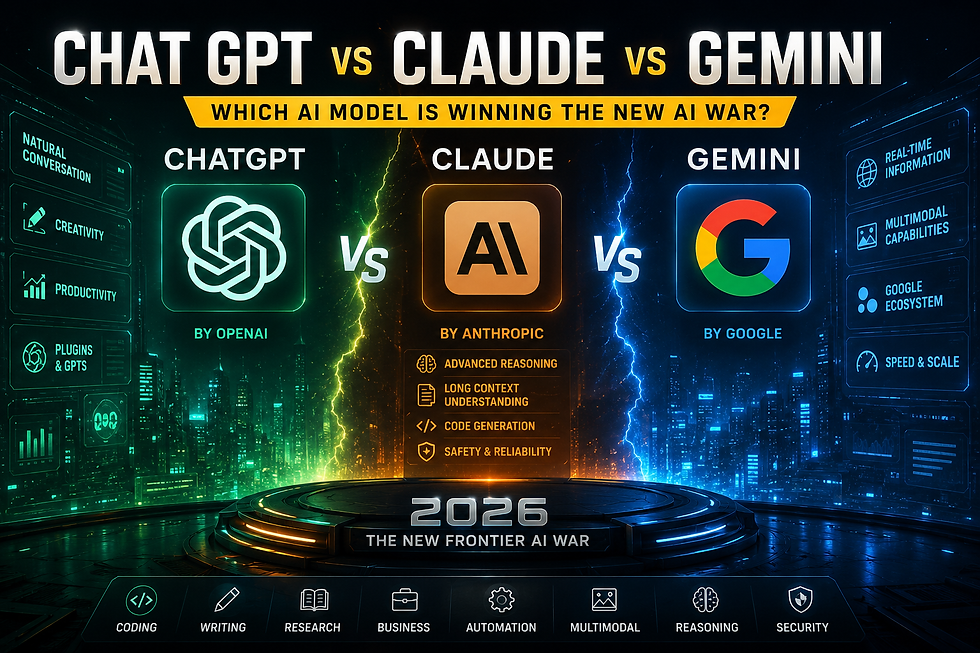
The companies closest to delivering AI Operating System capabilities in 2025–2026 are Microsoft (via the Copilot and Azure AI ecosystem), Google (via Gemini Enterprise and Workspace), Anthropic (via Claude and the Model Context Protocol), and a growing layer of specialized platforms including LangChain, Dify, and enterprise workflow tools. No single vendor has solved the full stack, and most enterprise deployments require integrating components from multiple providers.
Microsoft
Microsoft's approach centers on Microsoft 365 Copilot as the enterprise-facing layer, backed by the Azure AI infrastructure. By 2025, Microsoft reported generative AI presence in 85% of Fortune 500 companies through its platforms. The Microsoft Agent Framework — released as open-source in October 2025 — provides an SDK and runtime for building, orchestrating, and deploying multi-agent workflows in .NET and Python, representing Microsoft's most direct move toward an AI OS infrastructure play.
Microsoft's advantage is ecosystem depth. Its integration with Active Directory, Microsoft Graph (which provides access to emails, files, meetings, and calendars), and Azure's compliance infrastructure gives enterprises a governance-friendly environment that fits within existing IT policy structures.
Google's Gemini Enterprise (announced October 2025) positions Gemini as the coordinating intelligence across Google Workspace and beyond — connecting agents securely to Workspace data, Google Cloud, Salesforce, SAP, and other enterprise systems. For organizations already operating in Google Workspace, Gemini's native integration across Gmail, Docs, Sheets, Meet, and Drive creates a compelling AI OS foundation that works at the workflow layer rather than just the document layer.
Anthropic and the Model Context Protocol
Anthropic's contribution to the AI OS space is less about consumer-facing products and more about infrastructure standardization. The Model Context Protocol (MCP) — which has emerged as a standard for multi-model orchestration — defines how AI agents communicate with external tools and data sources. This protocol-level work is foundational: an AI Operating System needs a standard language for agent-to-tool communication, and MCP is increasingly fulfilling that role across enterprise architectures.
The Specialist Layer
Below the hyperscalers, a critical layer of specialized platforms is building the components enterprises need:
LangChain / LangGraph for orchestration and multi-agent coordination
Pinecone, Weaviate, Milvus for vector database and memory infrastructure
Dify for visual workflow building with RAG integration, accessible to non-technical builders
n8n and Flowise for rapid prototyping and internal tooling
Skan AI for enterprise process observation and grounding agentic systems in operational reality
The practical reality for most enterprises is that an AI Operating System will be assembled from this ecosystem, not purchased as a single product. The integration work — making these components communicate reliably, securely, and at scale — is where most of the implementation complexity lives.
Platform | Primary Strength | Best Fit | Watch Out For |
Microsoft Copilot + Azure | M365 ecosystem depth, compliance | Microsoft-centric enterprises | Cost at scale; lock-in risk |
Google Gemini Enterprise | Workspace integration, multimodality | Google Workspace organizations | Newer enterprise governance features |
LangGraph / LangChain | Orchestration flexibility, open-source | Technical teams building custom agents | Operational complexity; debugging overhead |
Dify | Visual workflow building, RAG-native | Non-technical builders, fast prototyping | Limited enterprise governance features |
Azure AI + MCP | Standards-based multi-model orchestration | Heterogeneous enterprise stacks | Requires significant integration effort |
Real-World Enterprise Use Cases
Financial Services: Intelligent Contract Review
A global investment bank deployed a multi-agent AI Operating System for contract review. The intake agent receives contracts via document upload, extracts key clauses using a RAG pipeline grounded in the firm's proprietary legal database, flags non-standard terms against approved templates, and routes anomalies to the appropriate legal specialist with a pre-populated analysis summary.
Result: review cycle time reduced from an average of 4 days to under 6 hours for standard contracts. The human legal team handles only the flagged exceptions — roughly 30% of volume — while focusing their expertise where it genuinely matters.
Life Sciences: Research Acceleration
Genentech's agentic deployment on AWS cloud infrastructure automates the time-consuming process of searching and synthesizing research literature. Autonomous agents break complex research questions into targeted search queries, retrieve relevant studies, extract key findings, and compile structured summaries — allowing scientists to focus on hypothesis generation and experimental design rather than manual literature review.
This is the AI OS model in action: not replacing scientists, but removing the lower-value cognitive labor that consumes significant portions of an expert's workday.
Logistics and Operations: Dynamic Workflow Management
In supply chain management, AI Operating Systems are being used to monitor shipment data in real time, detect anomalies, assess downstream impact, generate corrective action options, and communicate proactively with customers — all within automated workflows that only escalate to human operators when the situation exceeds predefined confidence thresholds.
The operational impact is measured in response time: what previously required a 45-minute multi-system manual process compresses to minutes. At scale — across thousands of daily shipments — this represents significant cost and service level improvement.
FourfoldAI Insight: The use cases above share a common pattern: they automate well-defined, high-frequency workflows where the value of speed and consistency outweighs the risk of autonomous action. Organizations that start with these "high-volume, well-structured" workflows build the confidence and governance muscle needed to expand into more complex territory. Explore how FourfoldAI.com helps organizations identify and prioritize their highest-value AI automation opportunities.
The Risks No One Talks About
There is a version of every AI Operating System discussion that focuses almost entirely on capability and productivity gains. That version leaves out the risks that are actually causing enterprise AI projects to fail — or worse, to fail silently.
Token Cost Escalation
Agentic AI deployments multiply token consumption by 20–30x compared to standard generative AI usage. A single complex multi-agent workflow can consume more tokens than thousands of simple chatbot interactions. Gartner projects that 40% of enterprise agent projects will be canceled by 2027 due to infrastructure cost overruns. Enterprises that enter AI OS deployments without rigorous cost modeling often encounter this reality at exactly the wrong moment — when the system has been built but cannot be scaled without unsustainable expense.
Cascading Failures in Multi-Agent Systems
In a single-agent system, a hallucination produces a wrong answer. In a multi-agent orchestration, a hallucination in Agent 1's output becomes the input for Agent 2, which acts on incorrect information and passes further corrupted data to Agent 3. Without output validation checkpoints between agents, errors propagate and amplify through the workflow before any human sees the result.
The Accountability Gap
Organizations consistently underestimate how governance requirements change when AI moves from advisory to autonomous. When an AI assistant gives wrong advice, the human who acted on it shares accountability. When an autonomous agent takes a wrong action, the attribution is murkier — but regulators and courts are consistently ruling that the organization deploying the system bears full responsibility. This is not a legal technicality; it is a material business risk that must be designed for explicitly.
Over-Reliance and Skill Atrophy
There is a less-discussed operational risk: when humans stop performing the tasks that AI automates, the institutional knowledge required to catch AI errors gradually disappears. If your contract review team has not manually reviewed a contract in 18 months because the AI handles it, their ability to recognize a subtle but consequential error in the AI's output is significantly diminished. Human oversight is only meaningful when humans retain the expertise to exercise it.

How to Evaluate an AI Operating System for Your Business
Evaluating an AI Operating System requires assessing five dimensions: technical fit (does the architecture support your data types and systems?), governance readiness (can it enforce your compliance requirements?), cost model (what is the total cost at your projected scale?), integration complexity (how does it connect to your existing stack?), and organizational readiness (do your teams have the processes to manage and improve autonomous systems over time?).
A Practical Evaluation Framework
Before issuing an RFP or booking a vendor demo, answer these questions internally:
Process Clarity: Can you document the workflows you want to automate in enough detail that a human new hire could follow them? If not, an AI agent will not be able to either. AI Operating Systems succeed where human processes are already clear enough to be systematized.
Data Readiness: Is your business data clean, accessible, and structured well enough to serve as the knowledge base for your agents? A RAG pipeline is only as reliable as the documents it retrieves from. Poor data quality is the single most common reason AI OS implementations underperform expectations.
Governance Design: Have you mapped which decisions require human approval, which can run autonomously, and who is accountable when something goes wrong? This design work must happen before technical selection, not after.
Build vs. Buy vs. Assemble: Very few organizations should attempt to build an AI OS from scratch. Very few can buy one off the shelf that meets their specific requirements. Most enterprises will assemble from components — a cloud provider's orchestration infrastructure, a specialized vector database, a governance tool from an independent vendor. Knowing which category you are in shapes every downstream decision.
Pilot Design: The best AI OS implementations start small and measurably. Choose one high-volume, well-defined workflow. Define success metrics before starting. Build the governance architecture at pilot scale. Then expand.
The Future: Edge Computing, Multi-Modal AI, and What Comes Next
The next generation of AI Operating Systems will move beyond cloud-centralized architectures toward edge computing deployments — running AI inference closer to where data is generated, reducing latency, improving privacy, and enabling real-time autonomous decision-making in environments where cloud connectivity is unreliable or unacceptable.
Edge Computing and AI OS
Manufacturing floors, hospital systems, logistics networks, and financial trading environments all have use cases where cloud round-trip latency — even at milliseconds — creates unacceptable delays for autonomous decision-making. Edge AI OS deployments run inference on local hardware, communicating with cloud systems only for training updates, long-term memory consolidation, and governance reporting.
This architectural shift has significant implications for governance: edge-deployed agents operate with reduced real-time oversight capability, making pre-deployment governance design even more critical than in cloud environments.
Multi-Modal as the Default
By 2026, the expectation is that multi-modal capability will be standard, not premium, in enterprise AI OS deployments. The ability to process documents, images, audio transcripts, and structured data within the same workflow is already available in leading models. The integration challenge — building pipelines that handle multi-modal inputs reliably at enterprise scale — is where investment is currently concentrated.
Contextual Memory as Table Stakes
Heading into 2026, persistent contextual memory is rapidly shifting from a differentiating feature to a baseline expectation. Organizations that deploy agents without long-term memory architectures will find themselves managing systems that are perpetually at the beginning of their learning curve — unable to improve with experience, unable to maintain the kind of institutional context that makes AI genuinely useful over time.
The Human Role
The most important thing to understand about the future of AI Operating Systems is this: they do not eliminate human judgment. They elevate the level at which human judgment is applied. As autonomous agents handle well-defined, high-volume tasks, human roles shift toward system design, exception handling, ethical oversight, and the kind of creative and relational work that AI cannot reliably perform.
Organizations that approach this shift as a workforce redesign — rather than a cost-cutting exercise — are consistently the ones that build durable AI OS capabilities. The ones that treat it primarily as headcount reduction tend to discover, too late, that they have eliminated the human expertise their governance systems depend on.
FourfoldAI Insight: At FourfoldAI.com, we believe the most important AI Operating System investment you can make right now is organizational, not technical. Building the internal capability to design, govern, and continuously improve autonomous AI systems is the competitive advantage that compounds over time. Technology vendors will change. The ability to use it well is yours to keep.
Conclusion
AI Operating Systems are not a distant milestone on the technology roadmap. They are being built right now, assembled from the orchestration frameworks, vector databases, multi-modal models, and governance tools that leading enterprises are already deploying. What most organizations lack is not access to the components — it is the architectural thinking that turns those components into a system that actually works reliably, scales economically, and improves over time.
The enterprises that get this right will not simply be "using AI." They will have restructured their operations around an autonomous intelligence layer that handles high-volume, well-defined work at machine speed — freeing human expertise for the decisions that genuinely require it.
The enterprises that get it wrong will spend considerable capital on agentic AI projects that eventually collapse under the weight of unplanned infrastructure costs, governance failures, or the quiet realization that they built powerful automation on top of poor processes and poor data.
The difference between those two outcomes is not talent or budget. It is the quality of the architectural thinking applied before the first line of code is written or the first vendor is selected.
FourfoldAI exists to bring that thinking to businesses and practitioners who are serious about building AI systems that work. We bridge the gap between the marketing version of AI and the operational reality of deploying it — because that gap is where most projects succeed or fail.
Frequently Asked Questions
What is an AI Operating System in simple terms? An AI Operating System is a coordination layer that allows multiple AI agents to work together across your business systems — accessing data, executing multi-step tasks, maintaining memory, and making decisions — all within a governed framework. It is the difference between individual AI tools and an AI system that can autonomously manage complex business workflows from start to finish.
How is an AI Operating System different from ChatGPT or Microsoft Copilot? ChatGPT and basic Copilot features are AI assistants — they respond to individual prompts and help with specific tasks. An AI Operating System goes further: it runs autonomous agents that can pursue multi-step goals, coordinate with other agents, access company data through memory and retrieval systems, execute actions in third-party tools, and operate continuously without requiring a human to prompt each step. Think of it as the difference between a tool and an infrastructure layer.
Do I need to build an AI Operating System from scratch? Almost certainly not. Most enterprise implementations assemble an AI OS from existing components — cloud provider infrastructure, orchestration frameworks like LangGraph, vector database services like Pinecone or Weaviate, and governance tooling from specialized vendors. The challenge is integration and architecture, not building from zero.
What are the biggest risks of deploying an AI Operating System?
The primary risks are: escalating infrastructure costs (agentic AI uses 20–30x more tokens than standard AI), cascading failures when agent errors propagate through multi-step workflows without validation checkpoints, governance gaps that create compliance and liability exposure, and organizational skill atrophy when human teams lose expertise in tasks that are fully automated.
How does Retrieval-Augmented Generation (RAG) relate to AI Operating Systems? RAG is the mechanism by which agents in an AI OS ground their responses in real company data rather than relying on the LLM's general training knowledge. When an agent needs to answer a question or complete a task, it retrieves the most relevant information from your vector database and uses that context to generate its output. This dramatically reduces hallucinations and makes agent responses specific to your business rather than generic.
What role does human oversight play in an AI Operating System? Human oversight is not eliminated — it is redesigned. Low-risk, well-defined tasks can run fully autonomously. Medium-risk tasks go through automated validation before acting. High-risk decisions (financial, legal, personnel) require human approval before execution. The goal is to configure oversight based on actual risk level, not apply it uniformly in a way that eliminates the efficiency gains.
Which industries are leading in AI Operating System adoption? Financial services (contract analysis, compliance monitoring, trading operations), life sciences (research synthesis, regulatory documentation), logistics and supply chain (dynamic operations management), and customer experience (intelligent support workflows) are among the most active adopters as of 2025–2026. Common across all: high-volume, well-structured processes where the cost of speed and consistency justifies the investment in governance.
Is an AI Operating System the same as Agentic AI? Agentic AI refers to AI systems that can act autonomously toward goals. An AI Operating System is the broader infrastructure — the environment in which agentic AI runs. Think of agentic AI as the application and the AI OS as the platform it runs on. You can deploy agentic AI without a full AI OS architecture, but doing so at enterprise scale without that coordinating layer creates significant operational and governance problems.
References and Sources
This article is backed by authoritative research, industry publications, and peer-reviewed analysis. Readers are encouraged to explore the primary sources for deeper technical and strategic context.
Introl Blog — AI Agent Infrastructure: What Autonomous Systems Require (February 2026): introl.com/blog/ai-agent-infrastructure
Skan AI — What Is an Agentic AI Operating Model? Definition and Enterprise Framework: skan.ai/blogs/agentic-ai-operating-model-enterprise-guide
California Management Review / Berkeley — Governing the Agentic Enterprise: A New Operating Model for Autonomous AI at Scale (March 2026): cmr.berkeley.edu
Amazon Web Services — The Rise of Autonomous Agents: What Enterprise Leaders Need to Know (June 2025): aws.amazon.com/blogs
Symphony Solutions — AI Agents in 2026: The Future of Autonomous Software: symphony-solutions.com/insights/ai-agents-in-2026
VentureBeat — Six Data Shifts That Will Shape Enterprise AI in 2026 (January 2026): venturebeat.com
Princeton IT Services — AI Hallucination in Multi-Agent Systems: The Hidden Risk in Enterprise Workflows (April 2026): princetonits.com/blog
SIDGS — AI Hallucinations in the Enterprise: Risks Explained (September 2025): sidgs.com/article/ai-hallucinations-explained
Computerworld — Agentic AI: Ongoing Coverage of Its Impact on the Enterprise (April 2026): computerworld.com
Neuronad — Microsoft Copilot vs Gemini (2026) (April 2026): neuronad.com/copilot-vs-gemini
IntuitionLabs — Claude vs ChatGPT vs Copilot vs Gemini: 2026 Enterprise Guide: intuitionlabs.ai/articles
arXiv — Hallucination Mitigation Using Agentic AI Natural Language-Based Frameworks (January 2025): arxiv.org/pdf/2501.13946
arXiv — AI Agentic Workflows and Enterprise APIs (2025): arxiv.org/pdf/2502.17443
DEV Community — Vector Databases Guide: RAG Applications 2025: dev.to
Meilisearch — 10 Best RAG Tools and Platforms: Full Comparison [2025]: meilisearch.com/blog/rag-tools
Ready to Move Beyond AI Tools and Build Something That Works?
If this article raised more questions than it answered — about where to start, which components fit your stack, or how to design governance before your first agent goes live — that is exactly the conversation FourfoldAI is built for.
We work with enterprise leaders, strategy teams, and digital practitioners to bridge the gap between AI ambition and operational reality. Whether you are mapping your first autonomous workflow or evaluating a full AI Operating System architecture, our resources, frameworks, and team are here to help.
Visit FourfoldAI.com to explore our resources, frameworks, and practical guides for enterprise AI adoption.
About the Author :
Muizz Shaikh is an AI enthusiast and digital technology professional associated with FourfoldAI. He focuses on artificial intelligence, digital innovation, and practical AI adoption for businesses and learners. His writing aims to bridge the gap between AI hype and enterprise reality — making complex systems understandable without oversimplifying what matters.
Connect with Muizz on LinkedIn: linkedin.com/in/muizz-shaikh-45b449403/
This article was published on FourfoldAI.com. For our full editorial and research disclaimer, please visit fourfoldai.com/disclaimer.
This article was published on FourfoldAI.com. For our full editorial and research disclaimer, please visit fourfoldai.com/disclaimer.

Comments